Choosing the Right Body Contouring Farmington Hills Plan for You
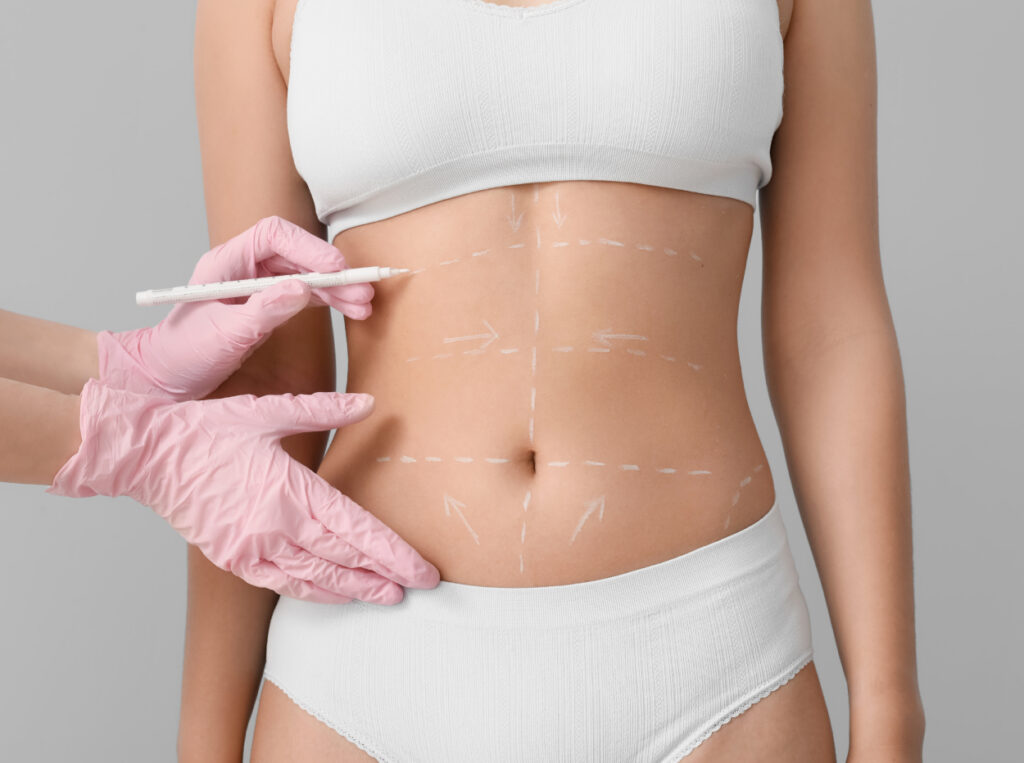


Body contouring sounds straightforward until you sit down and realize how many different goals can hide under that one phrase. One person wants a smoother waistline after significant weight loss. Another is close to their target weight but cannot seem to shrink a pocket of fullness under the chin or around the lower abdomen. Someone else is less interested in fat reduction and more focused on skin laxity after pregnancy or aging. Those are three very different problems, and they rarely call for the same treatment plan.
That is why choosing the right Body Contouring Farmington Hills plan starts with clarity, not technology. The right question is not, “What is the best procedure?” It is, “What exactly am I trying to change, and what kind of trade-offs am I willing to accept to get there?” Once that is clear, the treatment path usually becomes much easier to sort out.
Start with the goal, not the device
Patients often arrive having researched a brand name treatment. That is understandable. Marketing around body contouring is strong, and it tends to promise a lot with very little context. In practice, the more useful starting point is to define the issue in plain terms.
Is the concern stubborn fat that persists despite diet and exercise? Is it loose skin that hangs or creases? Is it muscle separation after pregnancy? Is it a combination of volume, skin quality, and contour irregularity? These distinctions matter because body contouring works best when the treatment matches the dominant problem.
A patient in good shape who wants to fine-tune the flanks may do very well with a targeted, non-surgical fat reduction treatment. That same approach will not deliver a satisfying result for someone with loose abdominal skin after losing 70 pounds. In that case, removing fat alone can make the area look flatter but more lax, which is not a win if skin redundancy was the main complaint to begin with.
The most successful plans are usually the least flashy. They are built around anatomy, lifestyle, timeline, and expectations. They also account for what the patient is willing to tolerate, including downtime, temporary swelling, compression garments, gradual results, or the possibility of needing more than one session.
What body contouring can realistically do
A good plan respects the limits of treatment. Body contouring can improve shape, proportion, and definition. It can reduce localized fat, tighten skin in some cases, and refine areas that do not respond well to exercise alone. It is not a substitute for weight loss, and it is not a reliable fix for every cosmetic concern.
This is where disappointment often begins. A person may be ten or fifteen pounds above the weight they feel best at, but they want a procedure to create the body shape they remember from years earlier. The procedure may help, but if the underlying issue is overall weight fluctuation, no contouring plan can fully outrun that. On the other hand, someone who is weight stable, active, and healthy may see excellent improvement from treating even a relatively small area.
Think of body contouring as refinement rather than reinvention. The closer your expectations are to that idea, the more likely you are to be pleased with the process.
Surgical and non-surgical plans solve different problems
The biggest fork in the road is whether your concerns are best treated surgically or non-surgically. Both approaches have a place. Neither is automatically better. The right choice depends on how much change you want and what you are starting with.
Non-surgical body contouring tends to appeal to people who want modest to moderate improvement, limited downtime, and lower immediate commitment. These treatments may use cooling, heat, radiofrequency, ultrasound, or injectable agents depending on the area and the goal. They can be useful for smaller fat deposits and, in some cases, mild skin tightening. The trade-off is that the result is usually more subtle and often gradual. You may need multiple sessions, and patience matters.
Surgical contouring, whether that means liposuction, excisional skin tightening, or a combination approach, generally offers a larger and more immediate structural change. It also comes with anesthesia considerations, a real recovery period, activity restrictions, and more visible swelling early on. For the right patient, especially one with significant excess skin or larger volume concerns, surgery can be the only path that aligns with the desired outcome.
A common mismatch happens when a patient with a surgical problem tries to solve it non-surgically because the idea feels easier. Loose skin after major weight loss is a classic example. Another mismatch happens when a patient with a small, localized concern assumes surgery is necessary when a less invasive option could accomplish the job with much less disruption.
The three variables that drive the plan
In my experience, most body contouring decisions come down to three variables: tissue type, tolerance for downtime, and standard of improvement. If you understand those, you can make a much more informed choice.
Tissue type means what is physically present in the area. Is it soft pinchable fat? Is the skin thin and crepey? Is the skin thick and elastic? Does the area project because of muscle structure or posture? Two abdomens can look similar in photos and require very different strategies in person.
Tolerance for downtime matters more than people think. It is easy to say you can handle recovery until you remember your work schedule, child care responsibilities, social commitments, and exercise routine. A person training for a race, traveling for work every other week, or caring for toddlers may not be in a practical position to recover from surgery right now, even if surgery might eventually provide the best result.
Standard of improvement is where expectations either align or clash. Some people would be thrilled with a visible 15 to 25 percent reduction in a problem area. Others will view anything short of dramatic change as a failure. There is nothing wrong with either mindset, but it needs to be clear before treatment begins.
Areas of the body do not all behave the same way
The abdomen gets most of the attention, but body contouring decisions vary a lot by treatment area. The submental area under the chin, for example, can respond very differently from the outer thighs or upper arms. The upper arms often involve both skin laxity and volume, which is why they can be frustrating to treat conservatively. The flanks can respond nicely when the issue is isolated fat and the skin tone is still fairly good. The inner thighs are more nuanced, because skin quality there can shift the plan quickly.
The lower abdomen is another area where people underestimate complexity. Sometimes the issue is just fat. Sometimes it is fat plus skin plus muscle laxity. After pregnancy, even fit patients may have lower abdominal contour changes that are not really about excess weight at all. If there is diastasis or loose skin, a treatment focused only on fat reduction may leave the patient wondering why the area still does not look firm.
This is one reason photos online can be misleading. Two “before” pictures may look close enough that patients assume the same treatment produced both “after” results. Often that is not true. Subtle differences in skin recoil, stretch marks, age, and baseline tissue quality can completely change what is realistic.
Weight stability matters more than people want it to
A stable weight is one of the strongest predictors of satisfaction with body contouring. That does not mean you must be at a mathematically perfect goal weight. It means you should be close to a weight you can maintain without extreme effort.
If your weight has been moving up and down by ten pounds or more, it is worth addressing that first. Body contouring during an unstable phase often leads to frustration because the result can shift along with your habits, hormones, or stress level. It is hard to evaluate success when the body itself is still changing.
For patients planning a future pregnancy, body contouring of the abdomen deserves extra thought. Pregnancy does not erase every procedure, but it can stretch tissues again and affect the longevity of the result. In many cases, waiting makes financial and practical sense unless the concern is in an area unlikely to be affected.
Skin quality changes the equation
People tend to focus on fat because it is easy to identify. Skin quality is quieter, but it often decides whether someone feels truly happy with their result. Mild skin laxity may improve with certain non-surgical technologies, especially in younger patients or those with better baseline elasticity. Moderate to significant laxity is much harder to correct without surgery.
Stretch marks can also signal reduced skin elasticity, especially on the abdomen. They do not automatically mean a non-surgical treatment will fail, but they should prompt a more careful conversation about what that treatment can and cannot do.
Age plays a role, but not in a simplistic way. A healthy 55-year-old with good skin tone can be a better candidate for some treatments than a 32-year-old with looser skin after weight changes and pregnancy. The body rarely follows neat age-based rules.
Your consultation should feel specific, not generic
A worthwhile consultation for Body Contouring Farmington Hills should feel tailored to you from the first few minutes. If the conversation jumps immediately to a single device or package without a real discussion of your medical history, previous weight changes, pregnancies, surgeries, skin tone, and recovery preferences, that is a red flag.
A strong consultation usually explores what bothers you most, how long it has bothered you, what you have tried, and what kind of result would make the process worth it. It should also address whether the provider sees one core problem or several layered issues. Sometimes patients come in asking about their abdomen, but the better result comes from looking at the waist, flanks, and lower back together because contour is about proportion, not just a single spot.
You should leave understanding not only what is recommended, but why. If a provider suggests against a treatment you came in asking for, that can actually be a very good sign. Honest restraint is often more trustworthy than enthusiastic overpromising.
Questions worth asking before you commit
The right questions can save you from the wrong plan. During a consultation, it helps to clarify the practical side as much as the aesthetic side.
- What is the main issue you are treating here, fat, loose skin, or both?
- What degree of improvement is realistic for someone with my anatomy?
- How many sessions or what kind of recovery should I expect?
- When will I see the final result, not just the first visible change?
- If I am unhappy afterward, what are the common reasons that happens?
Those questions cut through a lot of vague reassurance. They also make it easier to compare recommendations if you seek more than one opinion.
Cost matters, but value matters more
Body contouring plans can vary widely in price, and the cheapest route is not always the most economical. Non-surgical options may look more accessible upfront, but several rounds of treatment can add up. Surgical options carry a higher initial cost but may deliver the level of change a patient would otherwise chase through repeated non-surgical sessions.
The deeper issue is value. Value means the relationship between what you spend, what you endure, and what result you actually get. I have seen patients spend a considerable amount over time on treatments that were never likely to address their main concern. They did not make a foolish choice, they were simply sold a plan that matched their hope more than their anatomy.
That is why honest planning matters so much. If a provider tells you that you are likely to see only subtle improvement, believe that. For the right person, subtle is enough. For the wrong person, it becomes expensive disappointment.
Recovery is part of the treatment, not an afterthought
One of the most common mistakes people make is evaluating body contouring based only on the treatment day itself. The treatment day is often the easiest part. Recovery, swelling, temporary numbness, compression, scheduling, hydration, walking, and waiting are what shape the overall experience.
For non-surgical treatments, downtime may be light, but that does not mean there is no process. Tenderness, fullness, bruising, or delayed visible change can test patience. For surgical options, swelling can last longer than many expect, and final contour takes time to settle. Patients often worry too early, especially if they compare their body at two weeks to someone else’s photo taken at three months.
The best results tend to come from patients who prepare for recovery as carefully as they prepare for the procedure. That means arranging realistic help if needed, clearing the calendar where appropriate, and understanding what limitations are temporary but necessary.
Why “the best treatment” is often the wrong question
People naturally want certainty. They want to know the single best device, the single best method, the single best clinic. Body contouring does not work that way. A plan that is ideal for one person may be a poor fit for another with the same age, height, and clothing size.
The more productive question is, “What treatment best fits my priorities?” Some patients care most about avoiding surgery. Some care most about seeing the strongest possible change in one round. Some want the shortest interruption to work. Some are willing to wait three https://www.behance.net/ardwaterproof months for a gradual shift if it means no scars and no anesthesia.
Once priorities are clear, options narrow quickly. That is where a lot of confusion fades. You may discover that your preference for a non-invasive option is strong enough that you are comfortable with a milder result. Or you may realize that you do not actually want a mild result at all, and that changes the conversation.
Good candidates are not always who people expect
Body contouring candidates are often described too broadly. In reality, strong candidates usually share a few traits. They are relatively weight stable. They can describe a specific concern. They understand that body contouring improves, but does not perfect. They are healthy enough for the chosen treatment. They have enough patience to let the result develop.
On the other side, patients who expect a procedure to replace lifestyle changes, repair unrealistic body image standards, or create a dramatically different frame are more likely to struggle with satisfaction. That does not mean they should be dismissed. It means the consultation needs more candor and maybe a pause before any treatment is planned.
Here is a simple way to think about fit:
| Situation | Likely direction | | --- | --- | | Small, stubborn fat pocket with firm skin | Non-surgical or limited surgical treatment may work well | | Loose skin after pregnancy or major weight loss | Surgical consultation is often more realistic | | Weight still fluctuating | Stabilize first, then reassess | | Wants major change but no downtime at all | Expectations need careful recalibration | | Close to goal weight, healthy habits, clear target area | Often a strong body contouring candidate |
A Farmington Hills plan should fit your life, not just your body
The practical realities of your life in Farmington Hills matter more than many people assume. Weather, work routines, social calendars, fitness habits, and family obligations all affect timing and comfort. A treatment that requires compression under clothing may feel more manageable in one season than another. A parent of young children may need a very different timeline than a patient with more flexibility at home. Someone who sits at a desk all day will experience recovery differently from someone whose job involves lifting, bending, or long hours on their feet.
That is why the best Body Contouring Farmington Hills plan is rarely built in isolation. It should account for your schedule, your threshold for inconvenience, and your real ability to follow aftercare instructions. There is nothing glamorous about that, but it is often the difference between a smooth experience and a stressful one.
The right plan usually feels honest
When patients describe a consultation that felt right, they rarely say it was the one with the biggest promises. More often, they say it was the one that made sense. The recommendation matched what they saw in the mirror. The explanation was specific. The downsides were not hidden. The expected result sounded believable.
That sense of honesty is worth paying attention to. Body contouring is personal, and it sits at the intersection of medicine, aesthetics, and emotion. The right provider respects all three. They do not just tell you what can be done. They help you decide what should be done, what can wait, and what is unlikely to give you the payoff you want.
If you approach the process with clear goals, realistic expectations, and a willingness to match the treatment to the actual problem, your choices become far less overwhelming. The field of options may be wide, but the right path is usually narrower than it first appears. When a body contouring plan truly fits your anatomy, your timeline, and your standards, it stops feeling like a sales decision and starts feeling like a professional recommendation you can trust.
Aesthetic Plastic Surgery & Laser Center, Michelle Hardaway M.D.
Address: 27920 Orchard Lake Rd, Farmington Hills, MI 48334
Phone number: +12482211957
FAQ About Body Contouring Farmington Hills
What does body contouring actually do?
Body contouring (or body sculpting) eliminates stubborn localized fat, tightens loose, sagging skin, and reshapes your silhouette. It is not a weight-loss tool, but rather a cosmetic procedure used to refine and tone specific trouble spots after major weight loss, pregnancy, or aging.
How much does body contouring usually cost?
The total cost of body contouring usually ranges from $2,000 to $25,000+ depending entirely on whether you choose non-surgical sessions or major surgical procedures.
Because "body contouring" covers everything from simple fat-freezing to comprehensive post-weight-loss surgeries, pricing is heavily categorized by the method used.
What is the best type of body contouring?
Liposuction is a huge topic and worth discussing in more detail, but in terms of body contouring and sculpting, nothing does the job better than liposuction, particularly VASER liposuction.